
Chapter 2
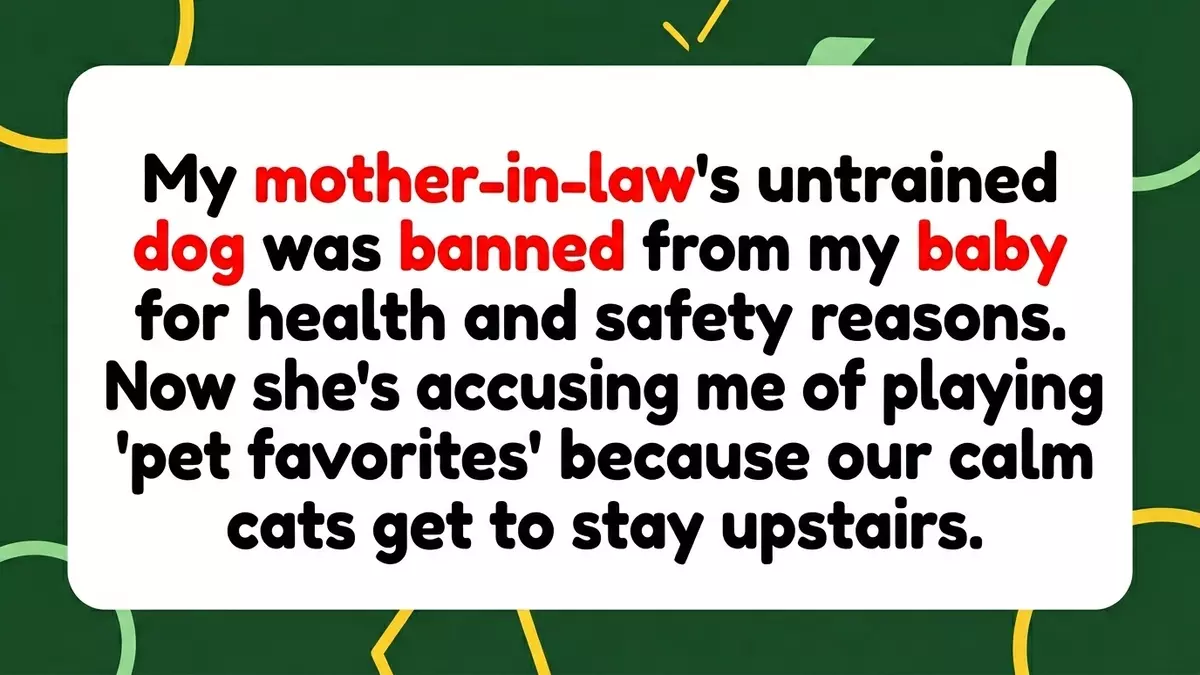
This accusation introduced a heavy dose of guilt and friction into the extended family dynamic. The underlying resentment quickly breached the surface during a recent family gathering. Despite the mother's quiet efforts to maintain harmony and keep the peace, she overhead passive-aggressive whispers coming from the kitchen. The mother-in-law was actively venting her frustrations to other relatives, framing the safety boundary as a direct attack on her choices and her lifestyle.
This domestic standoff left the young mother trapped in an exhausting cycle of feeling incredibly annoyed by the double standard, yet fundamentally guilty that her parental choices were fractures in the family peace.
The False Equivalence: Analyzing Animal Behaviors
At the heart of the mother-in-law's outrage is a classic psychological misstep: a false equivalence between two entirely different animal species and behavior profiles. Comparing the quiet, avoidant nature of well-behaved household cats to the intrusive, high-energy actions of an untrained dog ignores basic animal psychology and developmental safety.
Feline Indifference vs. High-Energy Intrusion
Cats are naturally independent creatures that frequently seek out quiet, isolated spaces. When an environment becomes loud or unpredictable due to a crying infant, a cat’s default instinct is typically to retreat and avoid the area entirely. This self-isolating behavior makes them an inherently low-risk presence around a newborn.
An untrained, excitable dog operates on a completely different behavioral wavelength. Dogs are highly social, sensory-driven pack animals. Without proper boundaries and obedience training, a high-energy dog will actively seek out new stimuli, jumping up to investigate objects, barking at unfamiliar sounds, and asserting dominance or anxiety through territorial marking.
Risk Assessment Is Not Favoritism
When a parent treats these two situations differently, they are not acting out of personal bias or playing favorites. Instead, they are conducting a rational, evidence-based risk assessment. A sleeping cat across the room poses no structural or physical threat to an infant; a 50-pound untrained dog jumping near a fragile bassinet presents an immediate physical danger.
The Biological Reality: Hygiene and Infant Safety
Beyond the immediate threat of physical impact or accidental scratches, the mother’s boundary is backed by significant medical and hygienic realities. A newborn's immune system is still developing, making clean environments and sanitary surfaces a top priority for pediatric health.
The Problem with Territorial Marking
Dog urine contains high levels of ammonia and bacteria. When an untrained pet marks baby gear—such as play mats, strollers, or bouncers—it introduces severe contamination to areas where an infant places their hands and mouth. Constantly sanitizing fabric gear is not only exhausting for a busy new mother, but any missed spots present a genuine health hazard to a child whose immune defenses are minimal.