
Chapter 2
To navigate this control dynamic without sacrificing your identity, experts recommend a firm, structured approach:
-
Set Explicit Communication Boundaries: Refuse to entertain insults masked as gender critiques. State clearly: "My financial stability and communication style are signs of adult maturity, not a threat to your gender identity."
-
Reject Mandatory Helplessness: Do not feign incompetence or create artificial problems just to give a partner a sense of purpose. A healthy relationship is built on mutual strength, not manufactured dependency.
-
Demand Self-Reflection: Recognize that the issue lies entirely within the insecure partner. True resolution requires them to look inward, redefine their own sense of adult worth, and potentially unpack these control issues through individual or couples counseling.
Public Verdict: A Glaring Screen for Control
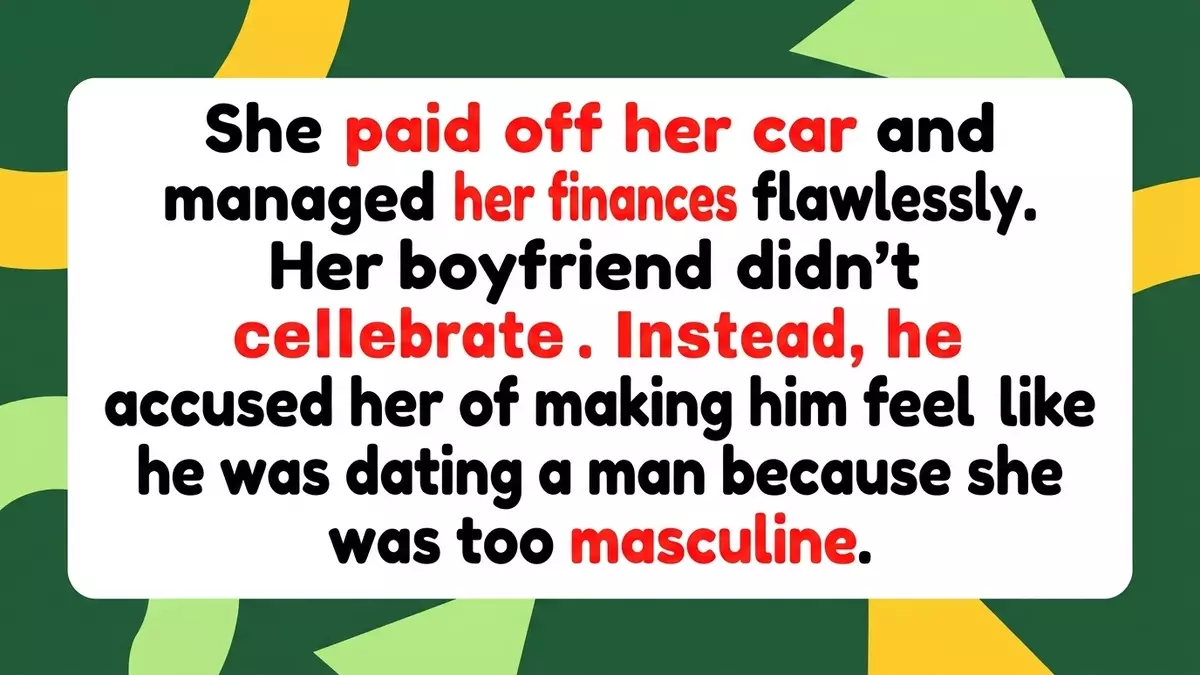
When this clash of modern independence hit online community forums, the public came in hot and was nearly unanimous in its support for the homeowner.
Commenters on platforms like Reddit fiercely warned her about the glaring red flags, pointing out that policing a partner's texting style or car payments is an absolute absurdity. The collective consensus was clear: the boyfriend's critiques were not a genuine reflection of her femininity, but rather a transparent manipulation tactic designed to break her confidence so he could maintain absolute control over the relationship.
Conclusion: True Partnerships Require Mutual Respect
Navigating a partnership where basic adult competence is viewed as a threat can leave anyone questioning their own reality. When deeply ingrained insecurities clash with modern independence, it forces couples to confront the uncomfortable truths beneath their daily interactions. A real partner celebrates your milestones and elevates your success. Finding common ground requires mutual respect and shared growth, never forced submission.
Frequently Asked Questions (FAQs)
1. Why do some partners view a significant other's independence as "masculine"?
This labeling stems from rigid adherence to traditional gender roles, which historically associate independence, financial authority, direct communication, and problem-solving exclusively with masculinity. When a woman exhibits these traits, an insecure partner may weaponize gendered terms to pressure her into a more submissive, dependent role.
2. What is fragile masculinity and how does it manifest in relationships?
Fragile masculinity refers to an anxiety or vulnerability some individuals feel when their traditional sense of manhood is challenged. In a relationship, it frequently manifests as hyper-criticism of a partner's career success, anger when a partner makes independent financial decisions, or a constant need to dominate conversations and household choices.